DSpace Repository
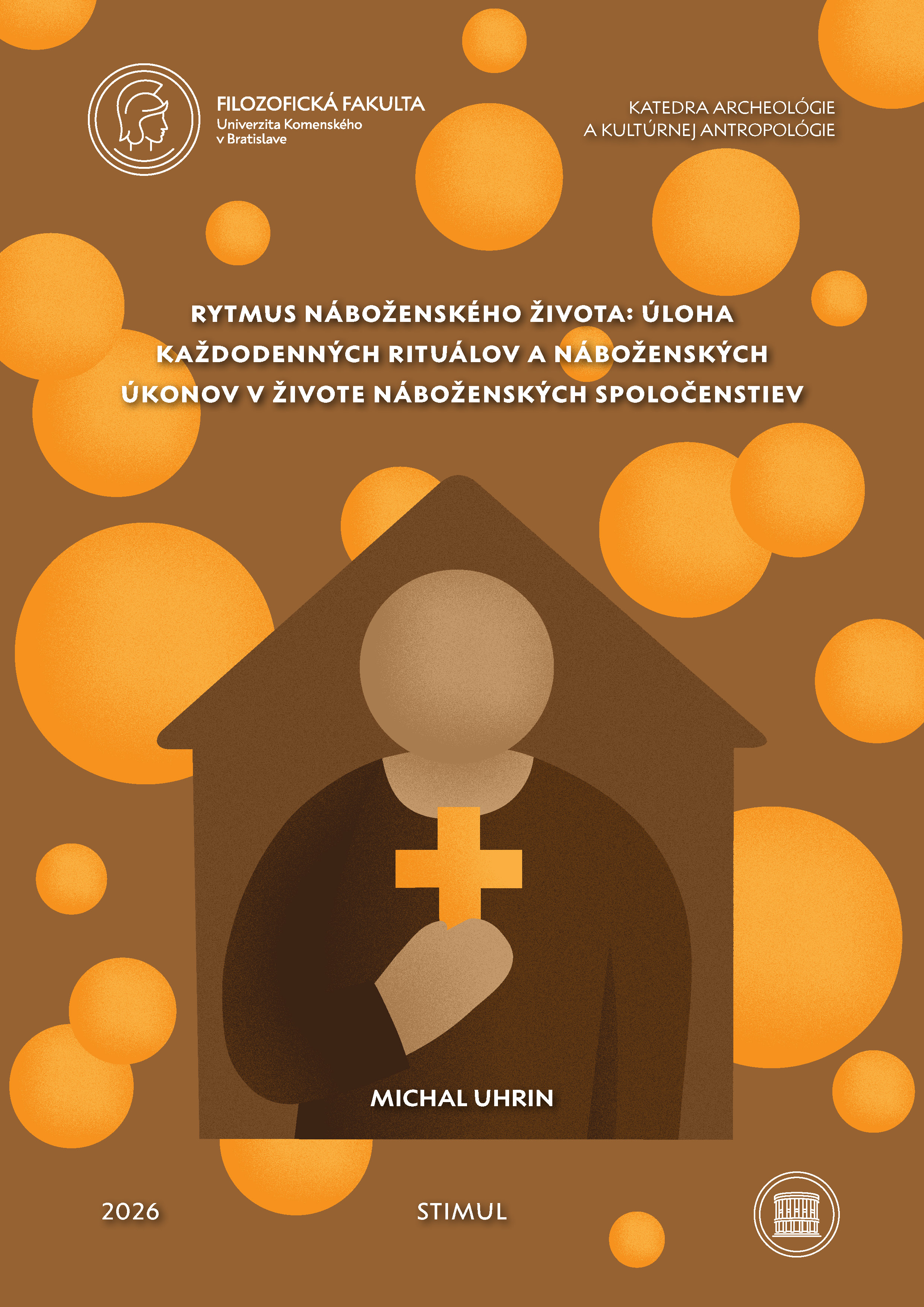
Rytmus náboženského života: úloha každodenných rituálov a náboženských úkonov v živote náboženských spoločenstiev
JavaScript is disabled for your browser. Some features of this site may not work without it.
Rytmus náboženského života: úloha každodenných rituálov a náboženských úkonov v živote náboženských spoločenstiev
Uhrin, Michal
Date:
2026
Abstract:
V posledných desaťročiach bolo publikovaných mnoho empirických a teoretických prác, ktoré skúmajú náboženstvo a rituály z rôznych teoretických a metodologických perspektív. Jednou z týchto perspektív je kognitívna a evolučná veda o náboženstve, ktorá sa rozvíja od druhej polovice dvadsiateho storočia. Jedným z najčastejšie skúmaných javov v tejto oblasti výskumu sú rituály. Táto kniha predstavuje analýzu obsahu, nákladov, kontextov a komunikačných aspektov rituálov (signálov), ktoré sa objavujú v náboženských kontextoch, z perspektívy teória nákladnej signalizácie rituálov. Cieľom knihy je skúmať tieto dimenzie signálov v troch lokalitách v rurálnych oblastiach Slovenska, v ktorých žijú príslušníci rímskokatolíckej a gréckokatolíckej cirkvi. Na základe dlhodobého etnografického výskumu autor ilustruje, že náboženské rituály a ritualizované správanie s nízkymi nákladmi a vysokou frekvenciou, nízkymi nákladmi a nízkou frekvenciou, ako aj jemné signály, sú nielen potenciálne účinnými nástrojmi a platformami komunikácie, ale sú tiež potenciálne účinné v procese budovania dôvery a udržiavania spolupráce a súdržnosti skupiny.
Description:
A substantial body of empirical and theoretical work has been published in recent decades that examines religion and ritual from various theoretical and methodological perspectives. One of these perspectives is the cognitive and evolutionary study of religion, which has been developing since the second half of the twentieth century. One of the most frequently studied phenomena in this field of research is rituals. This book presents an analysis of the content, costs, context, and communicative aspects of rituals (signals) that appear in religious contexts from the theoretical perspective of the costly signalling theory of ritual. The book aims to examine these dimensions of signals in three locations in rural Slovakia, inhabited by members of the Roman Catholic and Greek Catholic faiths. Building upon long-term ethnographic field work, the author illustrates that religious rituals and ritualized behaviours with low cost and high frequency, low cost and low frequency, as well as subtle signals, are not only potentially effective means and platforms of communication but are also potentially effective in the process of building trust and maintaining cooperation and group cohesion.
Keywords: religion, ritual, costly signalling theory of ritual, subtle signals, cognitive and evolutionary science of religion, Slovakia, ethnography
Sponsorship:
APVV-22-0063 Reprodukcie náboženských a svetonázorových štruktúr na Slovensku. Stopäťdesiat rokov zmien.
The Roles of the Agency of the Dead in the Lives of Individuals in Contemporary Society (DEAGENCY, ERC № 101095729). Views and opinions expressed are however those of the author(s) only and do not necessarily reflect those of the European Union or the European Research Council Executive Agency. Neither the European Union nor the granting authority can be held responsible for them.
Files in this item

This item appears in the following Collection(s)
-
Filozofická fakulta [88]
Faculty of Arts
Search DSpace
Browse
-
All of DSpace
-
This Collection